Showing posts with label history. Show all posts

Monday, September 5, 2016

I Am Australian

Emma: 

The Chorus of the song "We are Australian," says "We are one but we are many and from all the lands on earth we come, we’ll share a dream and sing with one voice I am,you are, we are Australian." It’s like a puzzle we are the pieces of the puzzle and eventually we will make a big puzzle.  

Artwork by Miles

Lucas:

Today we listened to the song,  “I am Australian.”   The question we had to answer was, What does this mean?

I thought the answer to this question was, that in each paragraph, was a different person’s point of view of their past and how they contributed to Australia’s history. People included the First Australians,Convicts and the First Fleet, World War 1 and 2, the landscape of Australia and Ned Kelly.

Artwork by Sophie
Caitlin: The song I am Australia is about the different perspective of different people’s point of view and that each person is an individual but together we are a family no matter where you come from.  There are three different perspectives No. 1 is about the First Australians, No. 2 is about the convicts and No. 3 is about gold-rush.  The song mainly means it doesn’t matter where you come from.. you are Australian.  
Artwork by Frances
Zac:
To me, the song “I Am Australian” is kind of telling the story of when the convicts were sent to Australia. Here are some of the words in the song: “Endured the lash, dry and barren run, child of depression and mother lode”. Here is what they mean: “Convicts, no water, time of poverty and gold”. The song means to me that we are all different people from different backgrounds, but no matter what, we are all Australian. It is a very nice song and I hope you enjoy it!

Artwork by Ava

Rosie

I came from the dream time from the dusty red soil plains........... Do you know that song? Do you know the rest of the song? What does that song mean to you?

Well, that song means that we are all Australian even though you might be a different nationality. The line "we are one, but we are many" means that you are one person but together we are one big family. 

There are 3 perspectives in the story. The first perspective is from the Aboriginals perspective, second- convicts and third- gold rush. 


Can you think of what it means to you? Watch the video!


Wednesday, August 26, 2015

REVISITING OUR HEXAGONAL THINKING ABOUT AUSTRALIA'S HISTORY

Today we revisited our hexagonal thinking posters and we noticed that we had made a few errors when placing the hexagons last time. After our term of learning about Australian history, focusing particularly on the gold rush, we now know much more about the significant events of Australian History. A particular group we changed was the gold rush and topics surrounding it because we learnt that it was an important part in Australian history because the Eureka Stockade was Australia's first claim of democracy. A visit to Sovereign Hill supported our learning around this topic.

We were also able to create more links around immigration, culture, story and identity as a result of our experiences at the Immigration Museum. Immigration stories were an important focus that day, but we also engaged highly with the "Identity: Yours, Mine and Ours" exhibition.
By Alexandra and Stephanie


Monday, August 3, 2015

Making Connections @ the Immigration Museum

Steph: I enjoyed the film of the new arrivals where we focused on the the emotions. It was amazing to compare all the different reasons migration occurred. I connected to the story of my parents' migration caused by war and conflict.
Alex: I really connected to the worrying issue of racism on the tram because racism is all around us right now.
Elisa: I enjoyed comparing past and present sites and  I was amazed by the differences
Grace: Racism on the tram concerned me because it proves that little things, like not sitting next to someone, can be really hurtful
Eden:  I connected to the boats stories because of all the unexpected animal arrivals…but we are rather like those animals in that we also ruined the world of the first Australians.
Ben: I saw how people don’t mind their own business and choose to single someone out racially.
Dylan: I connected to the tram video when it pointed out how we judge people by certain categories
Joe: I was shocked by the outrageous sign from the USA about segregated drinking taps
Adam: I connected to other people’s points of view on the tram-seeing how people view things so differently.
Jack:  I connected to a picture of the T shirt “Australia Full” showing don't want certain people in our country...while those with money are acceptable.
www.museumvictoria.com.au
                                              
Will:I was shocked by the comic strip of the outback with the policeman saying, “No room for refugees.  Australia’s full!"
Kitty: I connected to the Sorry sign  and I remembered how Australia had been named, “Terra Nullius.” If we hadn't done the wrong thing in the first place, we wouldn't have needed to say sorry.
Angus : I connected to the emigration stories especially John Cotton's who migrated form Britain and had a great passion for birds
Ciaran: I was disappointed to learn of the Government's reaction to aboriginal communities
Tessa: I connected to the feelings of others who were new in this land and how hard it was for them
Chloe: I enjoyed going out and seeing the differences in our city from one hundred and fifty years ago and now.
Jamie: : I connected to the emotion  of those who had to leave war torn countries
Brandon: Because of my own migration story, I connected to those who leave their homelands
Joe: Our trip also raised our feelings of compassion to the homeless.


Saturday, July 25, 2015

Eureka Stockade

From Angus: 

The Eureka Stockade was a dramatic Australian history event taking place in the 1850’s in Ballarat,Victoria. The miners or diggers had come, from all over the world, to Ballarat to mine for gold.

There were people from China and America mining for gold alongside the Australians. The diggers needed a licence to mine for gold.There were police officers who would go on a licence hunt asking people to show them their licences. If miners were found without a licence, the officers would tie them to a log for the whole night until they paid the fee but if it was not paid by morning they would be sent to prison.The diggers were sick of this and one night they all came together to take a stand for freedom and burnt their licences. This is what started the Eureka Rebellion- the short war where 8 officers and twenty two diggers died.This battle was fought on the 3rd of December 1854. The diggers eventually and finally won their freedom and they were freed from the unreasonable rules.

Original Eureka Flag
From Dylan:

In the 1850s, people from all around the world came to Ballarat to mine for gold, but it wasn't easy as they thought it would be.
The Government saw what was happening and told the miners that they would to pay 30 shillings for a licence. Each month they would have to pay a fee of 10 shillings, if they did not pay this they would be tied to a log till they got the money. But in 1854 the miners stood up to this by raising their own flag to show that they didn't want to pay anymore.It was followed with a big fight and the  miners building their own wooden stockade. Twenty two miners and 8 soldiers died in the fight. Three years later the miners had the right to vote. The miners were able to mine in peace without the government down their throats.

 From Eden: 

On 3rd December, 1854, occurred a very dramtic event in Australian history.The gold miners had become agitated with how much they had to pay to mine, considering how little some of them found. Thousands of miners gathered and flew the Eureka flag, a blue flag with a white cross and five stars to symbolise the Southern Cross. The redcoats were alerted and, following the flying of the Eureka flag, there was a short but bloody battle where twenty two miners and eightof the police were killed. The battle didn't stimulate immediate change, a;lthough three years later the government granted all men the right to vote.

Sunday, July 19, 2015

Visual Literacy for Learning: Samuel Taylor Gill prints teach History


S.T Gill: Diggers on the Way to Bendigo-State Library Vic.
http://www.slv.vic.gov.au/whats-on/australian-sketchbook

Courtesy of The State Library of Victoria, the Seniors classes have been inspired to make use of the lithographs of Samuel Taylor Gill and other artists to assist their learning about the Goldrush. Using a Core Routine of Visible Thinking: See, Think, Wonder- a routine especially effective for exploring artworks, the students examined a series of Gill's lithographs to prepare for their imminent trip to Sovereign Hill.


Stephanie
SEE: old and young, no women, grassy trail, fishing rod, panning trays, kettle, hats, bags and a dog!
THINK:  walking to look for gold, it's humid and hot because of the light sky and clouds, they are tired because their backs are not straight when they are walking, clothes all seem clean so they are "going" not "returning"
WONDER: What's in the bags? Why have they brought a dog? Are they carrying their food? How long was the trip to the gold fields? Did anyone die on the journey?

 Elisa and Ciaran
Charles A. Doudiet: Eureka Riot 1854

SEE: the Eureka Hotel, town, wind, fire, dust, soldiers, crowd, hills, rioting
THINK: The hotel has caught fire!  The townspeople are angry because of what has happened! There's a battle going on!
WONDER: What's happening here? Who has caused this? What are the soldiers doing? How did the fire start and why is there rioting?

Tuesday, July 14, 2015

What is Story?

smallbiztrends.com

What is story?
Kitty: Story is some true or mythical information about the past, how the world was created or just your imagination.Story can also help your imagination and the way you see the world.

 Chloe: Stories help us to remember, they can be a tradition and they can inspire us and guide us through our path of life. They also teach us what and what not to do.

Ciaran:  What is story? Story is the passing on memories to future generations. It expands people's imagination until they too, tell the same story. 

Stephanie: I believe that it is important for everyone to have a story to pass on to future generations, show others your story past and present or just to keep memories alive.


Monday, July 13, 2015

SOLO HEXAGONS and HISTORY

Today we began our new inquiry with the Rich Question: How has Australia's Story Grown and Developed? We completed the Solo Hexagon activity which meant we joined the hexagons according to their words and grouped them together. It was a fun activity which started us thinking about our new history topic. Afterwards we had to justify why we had grouped the hexagons in a particular way. They are only blu-tacked so, as we learn, we may be able to adjust our thinking and grouping.

Collaboration!

Eden and Mrs Y
Getting Started!
Making Connections


Tuesday, April 22, 2014

WAR ANIMALS

Today we learnt about war animals. "So what are war animals?" you may ask. They are animals that are used in war and they helped the army by doing things they couldn't do.This included pigeons taking messages, dogs listening for the enemy and cats eating the rats and mice that ate the supplies. Horses, mules and donkeys carried the injured men off the battlefield and carried the heavy supplies. We would love to hear your opinions about this video in the comments below. Here are some comments from the students who are arguing about whether or not animals should be used in war. Report from Tom and Will C.
In Ivan's opinion,"Dogs can be great company. But, they can also be trained to sniff out explosives or listen for the enemy."
In Madeline's opinion, "Animals have been, and still are, help we've always needed. However, this is no excuse for animal cruelty. A long time ago, one thousand horse were sent to war and only one returned."
In Katherine's opinion, "Horses were once used to carry food and most importantly, to help wounded soldiers to safety such as the famous example of Simpson and his donkey. On the other hand, it could be dangerous for animals to be at war with no protection and they could easily be killed, die of hunger or suffer from a lack of water."
In Corinne's opinion, "Animals play a big part in today's society and in yesterday's war and should continue their noble work."

Friday, August 30, 2013

NOTABLES from AUSTRALIAN HISTORY


Notables-Australian History from Marg Yore on Vimeo.


Madi
It was really cool staying in character for a
day. I loved looking at others projects and costumes. It was interesting
learning about people that have shaped our history and honouring them. I
could tell that all the classes enjoyed it.  I was
also amazed at how I remembered my information and didn’t need my cheat
sheet. I’m glad we did this project, it was an amazing experience.


Luke This was a very different type of project with many different things to do
e.g dressing up, making artifacts and preparing a poster, poems and
questions. Over all I think this project was one of the best I've had.
Amber
It was hard to do because we had to learn all of the facts off by heart and be in character the whole time! I especially enjoyed it because we got to dress up and learn about famous Australians!
Jess
Let’s date back to the 1850s or even further to a place to meet our
ancestors and to meet the famous and infamous, the good and the bad
and to meet some remarkable people from long ago and explore their
interesting lives. Friday was a great learning experience for everyone who
was watching and admiring our working and for the people who were actually
doing the work. It was great showing our learning to the people who didn’t
know anything about these people and walked out with their head
overflowing with facts. But you may just be thinking about the
presentation of our knowledge... but how did we find out about these people?
We have been studying these people intensely in class and at home,
trying to find as many artefacts as possible for our presentations and we have been
spending every free minute we had working really hard on our projects and
trying to get as many facts as possible. Overall it was an amazing
learning experience.

Mairead
Lights, Camera, Action.
Less complaining and more acting.
Less makeup and more ‘in character’.
This was awesome. This was hard.
This was an experience to remember.
 Dresses, Suits, Doctors Cloaks.
 Less Aussie 2000’s and more 1900’s.
 Less Aussie accent and more posh tosh.
This was amazing. This was fun.
“This was an olden days' item.”

Sunday, August 11, 2013

HISTORY AT OUR FINGERTIPS-SOVEREIGN HILL


Sovereign Hill from Marg Yore on Vimeo.
Lizzy says, "To sum up, Sovereign Hill has been my favourite excursion yet and was a life-changing experience. I feel very lucky to have been able to learn in a really fun, interesting and exciting way."

Eureka!
Ivan thought, "It was very hard to find the speck of gold but, once you found it you felt really good!"

Daniel reflected, "I enjoyed the day because I learnt a lot including how the Eureka Stockade was penetrated and invaded."

Madeline reported, "Gold, news, people, crowds, mines,finds, Eureka! At Sovereign Hill you are given a door into 1850's Australia, at the heart of the Gold Rush....panning for gold was fun and was the thing I was most looking forward to. It is quite a skill and was much harder than I expected....what I enjoyed most about the lesson was the "Detective Box." My group had Samuel Taylor Gill. We discovered from the clues that he was English, an artist and an alcoholic."

Luke added,"I thought it was a good idea to have a person down at the creek to tell us how to pan for gold and then we got to try for ourselves....the mine tour was a real eye-catcher and seeing all the old shops such as the blacksmith and the lolly shop was a real reminder of the olden days."

 Simon, "For me, it was stepping back into the past. I was amazed at how great all the volunteers were at acting and some were quite funny and very entertaining. Walking into the lolly shop was spectacular, as it was just like a land of lollies."


Monday, August 5, 2013

PROJECT PIES - HISTORY HOMEWORK TASK

For homework we had to create a model of something historical. It had to relate to Australian history, and we could use any materials. At first I had some trouble getting an idea, but I discussed some ideas at home and we thought making Aussie meat pies would be good. We had to make a poster to go along with the project. Here's some information I discovered: the first Aussie Four 'n Twenty meat pie was made in Bendigo in a small bakery in 1947.The Australian meat pie is so well liked around the nation it could almost be termed a national dish. For Aussies the meat pie is the treat of choice when watching sport. Basically this pie consists of a hand-sized pastry filled with minced meat and gravy – although it may also be filled with onion, cheese, mushrooms, chicken, seafood, crocodile, camel, vegetables or other fillings. Typically it is smothered in tomato sauce. It was great making the pies using lots of different ingredients. When I brought the pies to school my teachers helped me. My classmates were very excited and they enjoyed the pies and so did I. Some of the pies were labelled with history pins!

Friday, February 8, 2013

The Redfern Address

Posted by Carley and Amber:
In 1992, Paul Keating, the Prime Minister of the time, delivered a very powerful speech about racistm. So today, we watched the speech, and wrote a paragraph about it.

Most of the seniors thought that it was very appropriate of him to stand up for the indigenous people, because he was non-aboriginal. Here are some examples of what the students wrote after seeing the speech.


Raquel wrote: It was 1992 when the PM Paul Keating made a fantastic speech about how sorry he was for all the things that we did to innocent indigenous people. My opinion of this whole is that it was a terrible way to treat people who live in their own land.

Ivan wrote: Paul Keating wanted to "forge a new partnership" with indigenous people. He said to imagine if our children had been taken from us, imagine if our land was taken from us and to imagine if hundreds and thousands were murdered and we might know how our indigenous Australians might feel.

Luke wrote: In December 1992, when Paul Keating was Prime Minister, he made a strong speech called "The Redfern Speech." He used repetition to remind non-Aboriginal Australians that we are the ones who brought alcohol, disease, murder and also took children from their families. Imagine if that happened to us as well?

Simon adds: Being a Social Justice leader in my school, I will try and do my best to encourage everyone to understand.

Lizzy challenges: Imagine sweeping injustice aside forever? Would we all be treated as equals? Would we all fit in? Well, we certainly didn't when our former prime minister bravely explained how unfair we were to our indigenous people. Their land, their children...we took the lot. But we didn't just take. We brought disease, alcohol and murder as well....one day I hope we unite and forge a new partnership.

Anthony reflected: It made me think about how greedy people are and how we can't share our world and how we destroyed the land in front of them and we don't care. The speech made me ask have we changed or are we still wanting more?


Monday, February 4, 2013

I Have A Dream - Leadership

Our blog post today is from Mairead and Carley...
On the 4th of February (which is today), the seniors wrote a paragraph (or two!) on the famous speech I Have A Dream by Dr. Martin Luther King. He talked about freedom,equality and justice.

Our focus of the week in writing is speeches. Speeches that make people one in a million...who are strong as they speak the truth and for what is right!

Here are some paragraphs written by different people, explaining how the speech taught them even more than the orator had to say.

Ateil wrote:"I think Dr Martin Luther King was a brave person who stood up for his people. There was a word he used a lot..."I have a Dream!"
Jess wrote:"Martin Luther King put out an amazing message to our world. In 1963, our world was changed forever as this great orator spoke out about justice and how racism needs to end now....in his words we should all be able to sit together at a table and talk.I agree...we all deserve a fair go."
Conor wrote:"I have a dream that all mankind may be treated equally. As one of the most famous speech givers in earth's history, Martin Luther King Jnr came out on the 28th August, 1963, and in front of 200,000 people, and gave a 17 minute speech that changed the world forever.This speech touches everyone who listens to this much cherished speech. This year, being the 50th anniversary, we still say,"Don't forget!'"
Madeline wrote:...."I was deeply moved by how he desperately wanted his four children to not be judged on the colour of their skin, but for who they really are. This brilliant orator even used biblical references:'Make crooked places become straight,and hills flattened..' Martin Luther King was a highly influential figure in the Civil Rights Movement and will always be remembered for his dream-THE END OF RACISM.'
Lizzy wrote..."Martin Luther King really taught us that we can all be united together as equals."


Tuesday, November 13, 2012

AND THE BAND PLAYED WALTZING MATILDA

Reflections after viewing the video clip, "And the Band Played Waltzing Matilda," Eric Bogle's poignant reflection on war.

 Harry:"And the Band Played Waltzing Matilda,"is a truly inspirational song. It was created by Eric Bogle. It explains the terror, pride and risk of war, but most of all, it teaches us that war may never come to an end, as greed won't stop either. War shall never benefit anyone, because when lives are lost, nothing else matters. This is one of the messages that this encouraging song throws at you. This song explains what terror and chaos war brings and I believe this song does just that.

Hannah P: What a touching story, the words so moving, the actions so brave.It really paints a terrible picture in my mind..the picture of men fighting, killing and hiding. Eric Bogle has really taught the younger generation about war.

Fintan: Eric Bogle's song, "And the Band Played Waltzing Matilda," was a very inspirational song about war. My favourite part of the song is when Bogle sings, "And we started all over again," because it shows we didn't learn how bad war is.

Jessica S: Hearing the words of Eric Bogle, created a horrible vision in my mind of how hard it is to be at war. It also made me think of human's stupidity to continue war, killing and injuring more people. This song really made me think of all the horrendous memories that the soldiers would have and how hard it would be for them to move on.

Charlotte: This touching video clip was really inspiring and showed me how brave soldiers have to be and what they have to go through. The line that said, "never knew there was worse than dying," made me realise how lucky we are and how much we take for granted. But the fact is- we know how terrible war is and still did it "all over again."

Tim: Watching this film made me feel sad and grateful- to those who risked their lives for their country...I like the idea of using Waltzing Matilda as an inspiration for a really great song.

Vanessa: Watching this clip reminded me of how lucky we are to be standing here today. Our country, Australia, is blessed to have the soldiers that fought to save our country. We are truly thankful for the work you did for us to make us a safe country.

Celine: This film was very sad, but touching at the same time. It made me remember all the brave people who fought in the war. I likes how the pictures were included and that the song was like telling a story.

Braden: This video made me think how sad it would be if I was forced to go to war and how sad it would be for my family. I also thought how many people have risked their lives for others. "And the Band Played Waltzing Matilda" inspired me to be nicer to others.


Tuesday, April 24, 2012

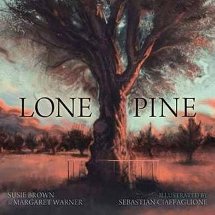
Remembering on Anzac Day...Response to Text-"Lone Pine."

 Reading the moving story of "Lone Pine," inspired our writing today. The authors are Susie Brown and Margaret Warner and the illustrator Sebastian Ciaffaglione.
Leah wrote: Based on a true story, "Lone Pine" really moved my soul! In a battlefield in Turkey, two brothers far away from home have to suffer losing their youngest brother in battle. They send a pine cone to their mother...not knowing it would turn into a symbol of remembrance! Lest we forget!
Jia-Yi wrote:  "Lone Pine" is a moving and powerful true story. The authors use short, sharp and powerful sentences to get straight to the point...the story appealed to me because of the dramatic and dynamic vocabulary, for example, "solitary" and "memorial." I also realised that many things resembled the three brothers who fought in the war. For example, the three seeds grew into three saplings, two of them stood tall, while the third withered away. This story reached out to touch my heart. Lest we forget!

Harry wrote: The weather is foul. I can see a storm coming. It is nearly time. The real fight is about to begin. I can sense it. Many will be lost. I'll be lucky to survive...my one wish is to survive this terrible war along with my brothers......the war has finally come to an end. Somehow I survived but, I have yet to find my little brother, and I fear that I might never see him again...
These might have been some of the soldiers'  thoughts. The battle of Lone Pine is a truly moving story that shows us the pain and sadness of war and how it can affect us all. But the lives lost were not soon forgotten, and every year, all around Australia, we remind ourselves of the lives lost!  Lest we forget!

Chloe O wrote: This story is sad, with the classic Anzac Day message, lest we forget. The short powerful sentences harden the story and catch our attention. I thought the pine saplings used as symbols worked well. It is sad to think this is a true story. The illustrations were very striking, especially the two dawn scenes, one with the young pines them the lone old pine tree.

 Jess K wrote: This book is very powerful. I loved the strong language and powerful illustrations that really painted the picture! I loved how one little pine seed could make a big difference in someone's life... Lest we forget!

Thursday, December 1, 2011

NED KELLY RIDES AGAIN

Inspired by Sidney Nolan's "Ned Kelly" series and our current inquiry, "History in the Making," we have created our artworks about Ned Kelly.

Tuesday, November 29, 2011

NO MONEY - NO LIFE - THE GREAT DEPRESSION IN VICTORIA

We would love your help with our research about events that shaped Victoria's history!

Firstly, how did the Great Depression affect your family in the past?

Secondly, how do you think the Great Depression affected Victoria's history. Were there both positive and negative outcomes?

Monday, November 21, 2011

NED KELLY AND THE GREEN SASH - "TALKING HISTORY"

While still a school boy, Ned Kelly bravely rescued a drowning class mate from a flooded river.The boy's parents were so grateful that they awarded Ned a green hero's sash. In their eyes at least, Ned was a hero.
ENJOY OUR REFLECTIONS ABOUT NED AFTER HEARING THIS STORY.


Ivan... "I liked how Mark Greenwood put forward Ned's point of view in the story...it told me that the darkest life will always have a bright side!"

Corinne....Mark Greenwood takes us on an amazing journey of Ned Kelly's life..I would never be brave enough to do any of the things he did. Amazing as this story (The Green Sash) was, it was one of the saddest stories I've heard. I guess we will never know if he really was a hero!"

Matt..."This book entranced me! It made me think about courage, bravery, evil and good and to see Ned Kelly's place in history. For instance, some peple think he is a hero and others think he is a cold-blooded killer. My opinion is he is a hero. What do you think? My favourite line is, 'Ned Kelly ran his bloody fingers through the green sash.' "

Elizabeth..."In this story Ned Kelly tells us about his life and how it was good and then bad and about how his beautiful green sash was once a reward for bravery...in my opinion, Ned Kelly was forced into being a bushranger to protect his family and my final words to this piece of writing will be the same as his...such is life!"

Chloe....I enjoyed this story because I like how it was from Ned's point of view. The descriptions that I was attracted to were "paddocks turned to dust," "could bog a duck" and "struggled to scrape a living."...The Green Sash shows that Ned wasn't all bad and saved a life. But, he did murder police. I guess I'll have to think about it!"

Mairead....I was surprised that Ned Kelly saved Richard Shelton's life. How do you feel about it? I thought his last words, "Such is life," said to me..."life is like birth-growth-death-and there is no way to stop it.